Log rot is one of the most serious threats a log home can face, but it does not always mean your home is beyond repair. What begins as a small soft spot, dark stain, or area of moisture damage can raise major concerns about safety, structural strength, and long-term value. At Rocco’s Log Home Restoration, we provide professional log rot inspections, repairs, and replacements designed to identify damage early, correct the cause, and preserve the strength and beauty of your log home.
Our team understands that log homes require specialized care. Montana’s seasonal weather, snow accumulation, spring runoff, freeze-thaw cycles, direct sunlight, and moisture exposure can all affect wood over time. Through careful inspection and proven repair methods, we help homeowners protect their investment and keep their log homes standing strong for generations.
Wood rot is a naturally occurring process caused by fungi that feed on damp wood. While that sounds alarming, the important thing to understand is that rot needs moisture to survive. When logs stay wet for long periods because of rain exposure, failing stain systems, clogged gutters, roof leaks, poor drainage, or limited ventilation, moisture begins to penetrate the wood fibers. Over time, the wood weakens and begins to break down.
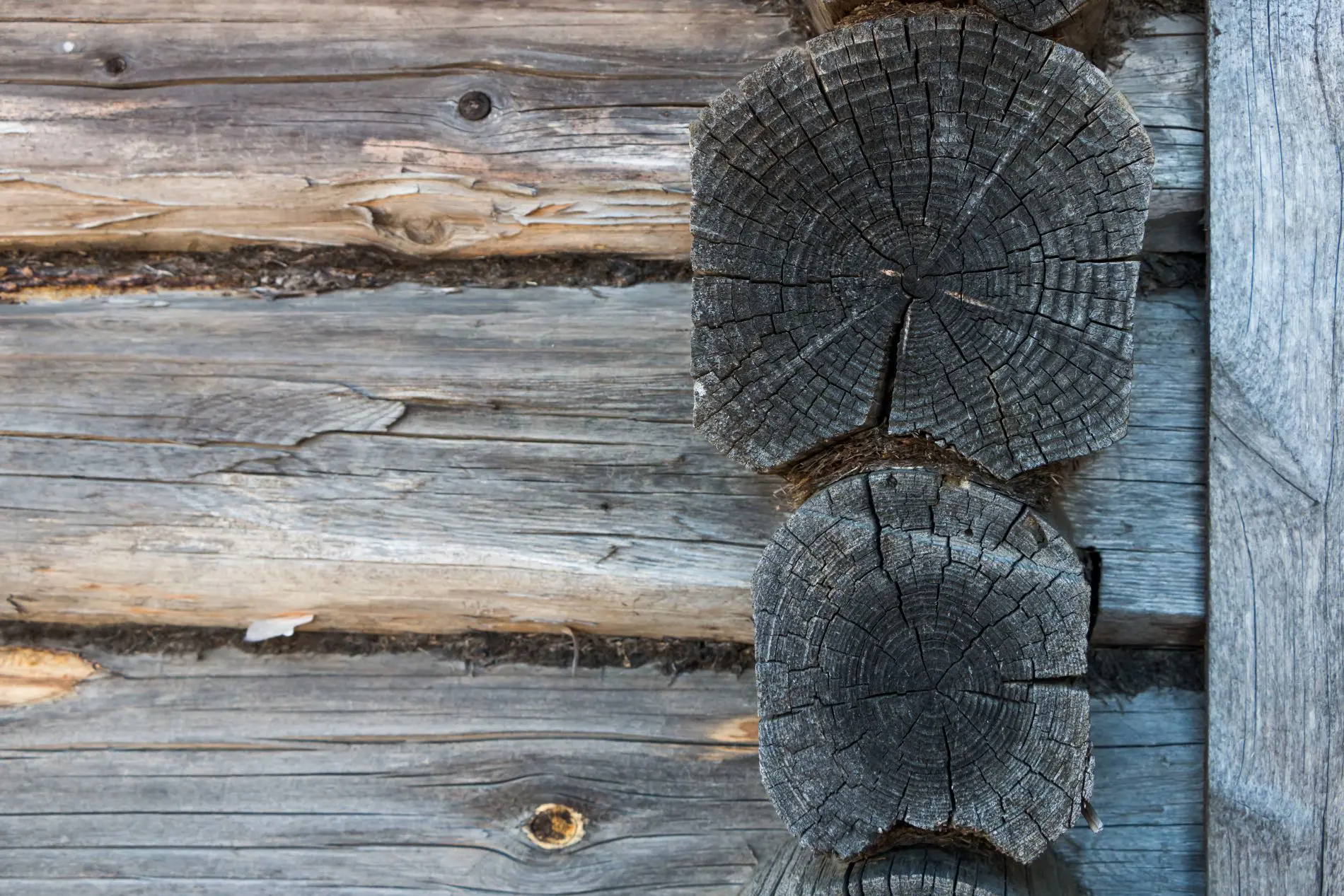
Log rot commonly develops in lower wall logs, corners, deck connections, roof intersections, window frames, door frames, and other areas where water repeatedly contacts the wood. These areas should be inspected regularly because hidden moisture damage can spread beneath the surface before it becomes obvious from the outside.
Moisture trapped inside or against the logs
Failing stain, sealant, chinking, or caulking
Poor drainage around the home
Roof, gutter, or flashing issues
Freeze-thaw cycles and seasonal weather
Insect activity in moisture-damaged wood
The key is not only repairing the damaged wood. Proper log rot repair also means identifying and correcting the moisture source that caused the problem in the first place. Without that step, repairs may only provide temporary results.
A professional log rot inspection is the first step toward protecting your home. During our inspection process, we carefully examine the exterior and interior logs, joints, corners, lower courses, deck connections, window openings, door frames, and any areas where water is likely to collect or enter the wood.
Some rot is visible, but other damage may be hidden beneath seemingly solid surfaces. Our experienced team looks for soft wood, discoloration, hollow-sounding areas, moisture patterns, insect activity, failing coatings, and structural concerns that may not be obvious to the untrained eye.
Soft, spongy, or weakened logs
Dark staining or moisture marks
Gaps in chinking or caulking
Cracked, peeling, or failed stain systems
Insect holes or sawdust evidence
Water entry points and drainage problems
After the inspection, we explain our findings clearly and recommend practical next steps. Our goal is to help you understand what needs attention, what can be preserved, and what should be repaired before the damage becomes more expensive.
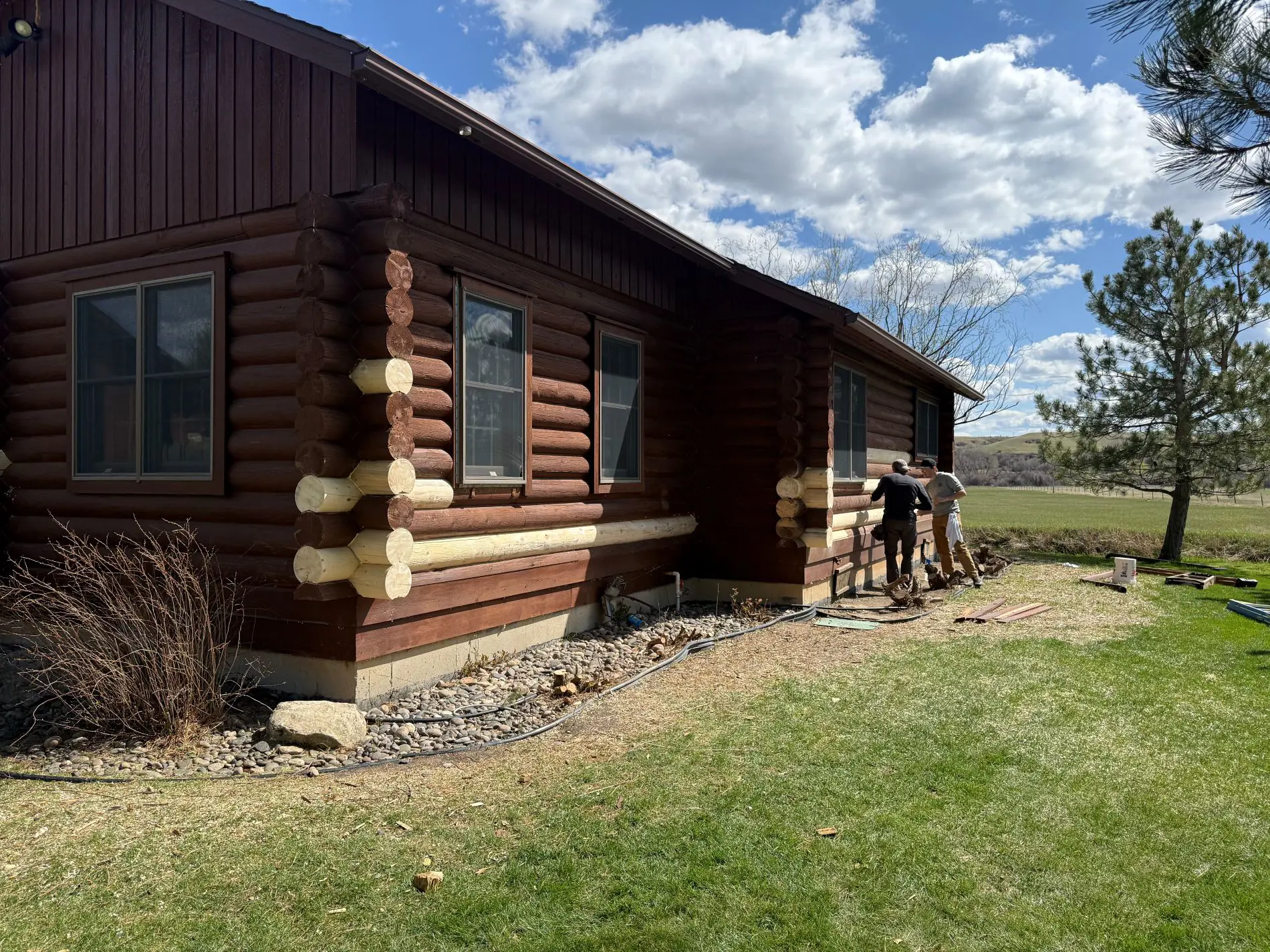
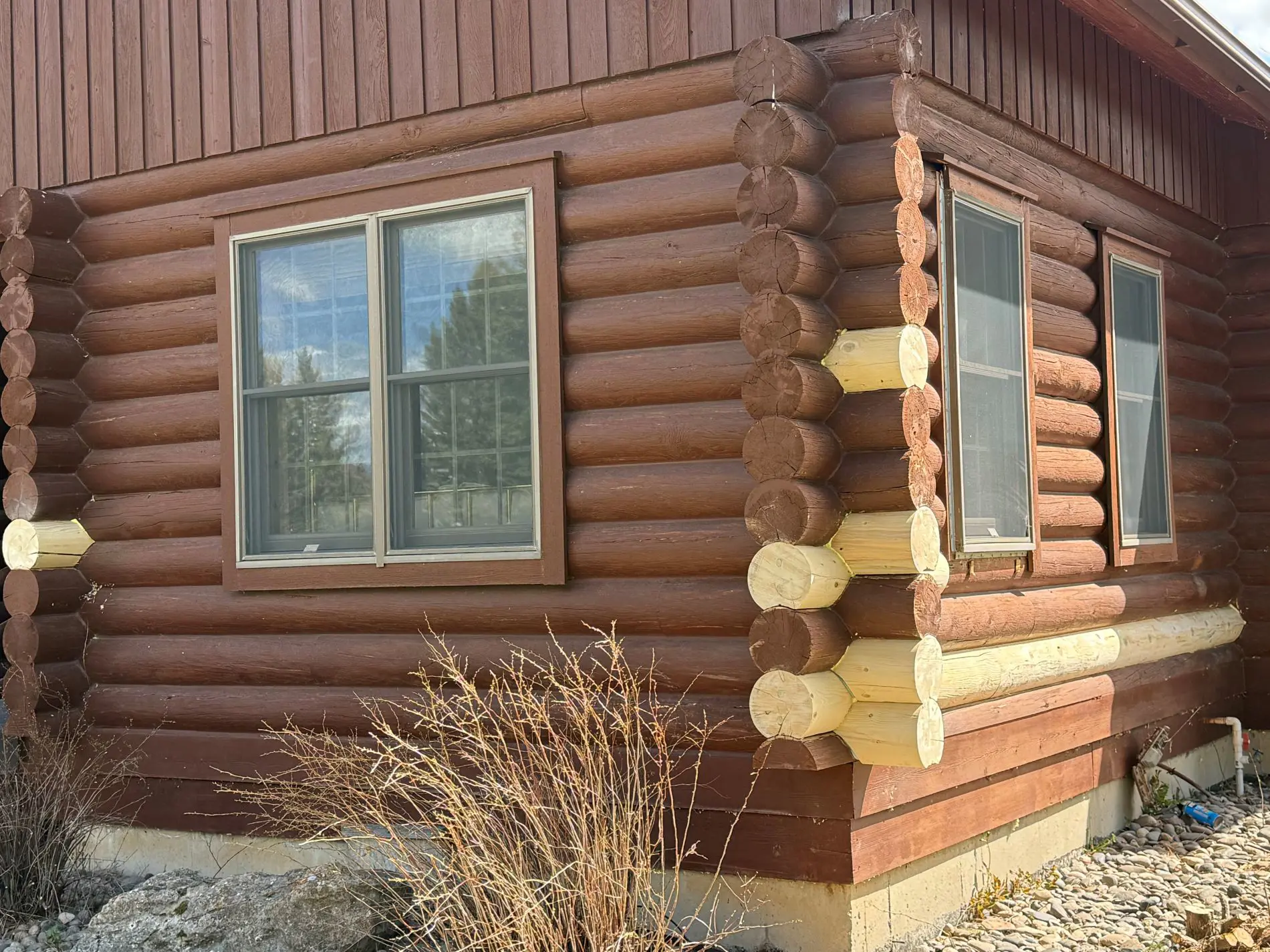
Log rot repair focuses on removing or stabilizing weakened material, restoring strength, and protecting the repaired area from future moisture intrusion. In many cases, rot can be repaired without replacing an entire wall or rebuilding large sections of the home. The right repair approach depends on the depth, location, and severity of the damage.
Our craftsmen work to preserve as much original log material as possible while reinforcing compromised areas. We use proven restoration methods to remove decay, repair weakened sections, treat surrounding wood, and restore protective barriers such as stain, sealant, caulking, or chinking.
Removing damaged or softened wood
Stabilizing partially affected areas
Repairing log ends, corners, and lower courses
Treating surrounding wood against future decay
Restoring sealants, coatings, or chinking
Correcting the source of moisture damage
Addressing rot early typically leads to smaller, less invasive repairs and helps preserve the historic character, appearance, and structural integrity of the home.
In some cases, rot has progressed too far for a surface-level repair or stabilization. When a log has lost too much structural strength, replacement may be the best way to restore safety and long-term durability. Replacing a rotted log requires careful planning, precision, and experience because the new section must integrate with the existing structure.
Our replacement process begins with a detailed assessment to determine which areas must be removed and which surrounding logs can be preserved. We carefully remove compromised material, select quality replacement logs or sections, and fit the new material to match the existing home as closely as possible.
Restore structural support
Match the appearance of existing logwork
Prevent the spread of decay
Protect adjacent logs from future damage
Improve long-term home stability
Prepare the area for staining and sealing
Each replacement is completed with attention to both strength and appearance. Once installed, the repaired area can be treated, sealed, stained, and blended so the home remains beautiful and protected.
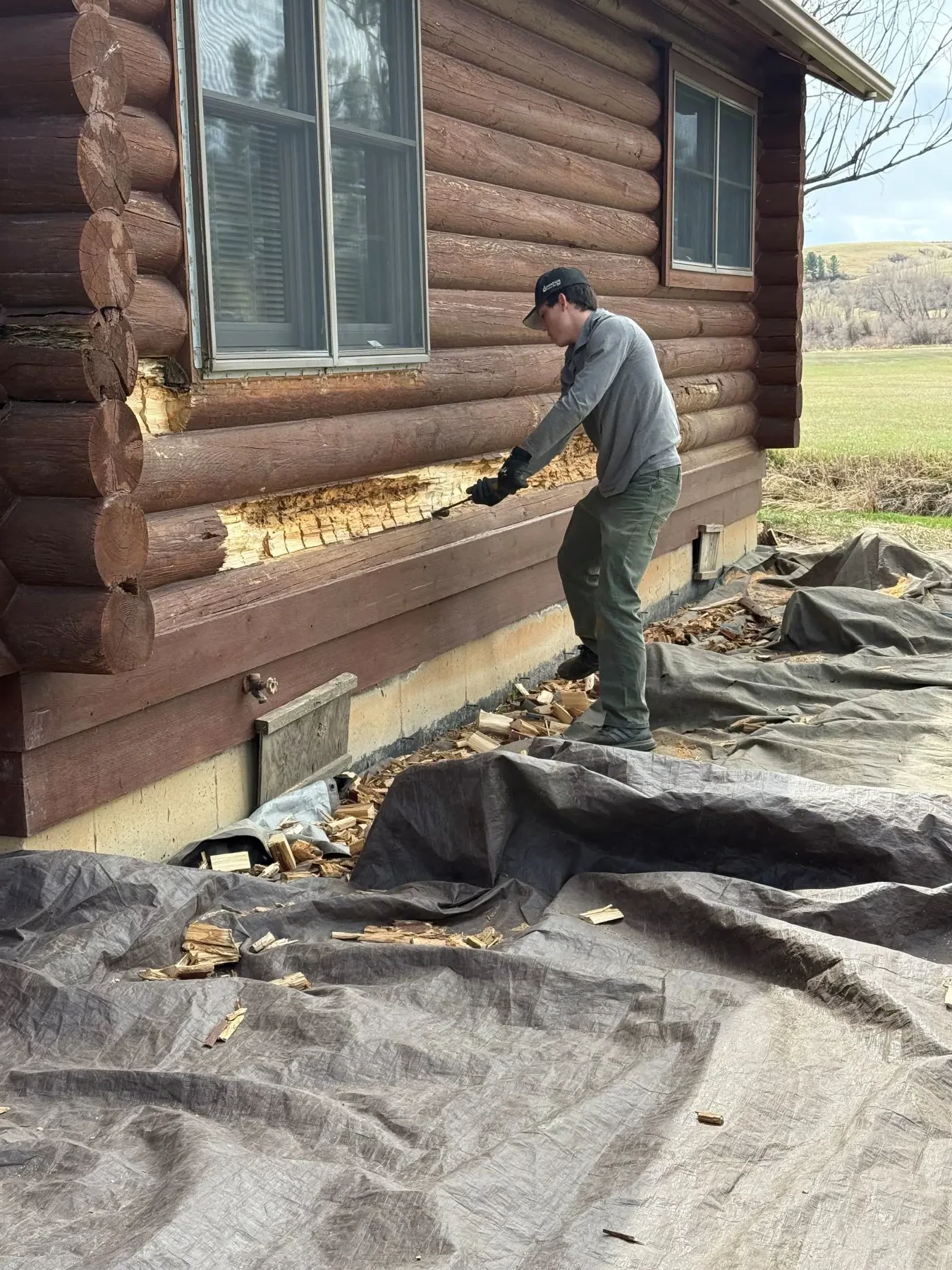
One of the biggest misconceptions about log rot is that it is only a cosmetic issue. In reality, wood decay is progressive and does not stop on its own. Small areas of deterioration can spread deeper into the log and eventually affect nearby logs, framing, insulation, or interior finishes.
Addressing log rot early helps reduce repair costs, preserve original materials, prevent more invasive reconstruction, and protect the home’s value. Many homeowners are surprised to learn that a smaller repair today may prevent a major structural restoration later.
Repairing damage helps maintain the structural performance of the log system.
Early repairs are often smaller and less expensive than full reconstruction.
Targeted repair helps keep more of the original logwork intact.
Stopping moisture and decay helps protect surrounding logs and components.
Log rot repair costs vary because every home and every damaged area is different. The extent of damage, the location of the affected log, accessibility, replacement requirements, moisture correction, and finishing work all influence the final scope.
A small localized repair will usually cost less than widespread structural decay. Logs located on upper stories, difficult terrain, or hard-to-access areas may require additional equipment or time. Some projects also require correcting gutters, flashing, drainage, roof issues, or other moisture sources to prevent the same problem from returning.
Size and depth of the damaged area
Accessibility and height of the repair area
Partial repair versus full log replacement
Drainage, flashing, or moisture corrections
Staining, sealing, chinking, or blending work
Labor and material needs for long-term durability
At Rocco’s Log Home Restoration, we believe homeowners deserve honest recommendations and clear communication. Every project begins with a thorough assessment so you understand exactly what needs attention and why.
Log rot can feel overwhelming, especially when you are unsure how serious the damage is or whether the affected logs can be repaired. These frequently asked questions explain how log rot develops, why early repair matters, and what homeowners should know before scheduling professional log rot inspection or repair service.
Yes. Internal decay can exist beneath a surface that appears solid from the outside. Moisture may enter through cracks, failed sealants, weak chinking, roof runoff, deck connections, or areas where water sits against the wood. A professional inspection can help uncover hidden moisture damage before it becomes a visible structural problem.
No. Many log rot problems can be repaired without replacing the entire log. The right solution depends on the depth, location, and severity of the damage. In some cases, damaged sections can be removed, stabilized, reinforced, or repaired while preserving as much of the original log as possible.
Log rot is usually caused by long-term moisture exposure. When logs stay wet because of poor drainage, failing stain, clogged gutters, roof leaks, snow buildup, deck connections, or inadequate ventilation, fungi can begin breaking down the wood fibers. The most important part of repair is correcting both the damaged wood and the moisture source that caused it.
Common high-risk areas include lower wall logs, corners, deck connections, window frames, door frames, roof intersections, and any location where water repeatedly contacts the wood. These areas should be checked regularly because they often collect moisture or receive runoff from nearby building components.
Insects do not directly cause rot, but they often take advantage of damp or weakened wood. Moisture-damaged logs can attract pests, and insect activity can accelerate deterioration by creating more openings in the wood. During inspection, both rot and insect activity should be evaluated together.
The speed of rot depends on moisture levels, temperature, airflow, wood condition, and fungal activity. In favorable conditions, decay can spread faster than many homeowners expect. That is why early detection is important. Small repairs are usually less invasive and less expensive than waiting until rot compromises larger sections of the home.
Quality stains and sealants help protect logs from moisture intrusion, UV exposure, and weathering, but they work best as part of a complete maintenance system. Proper drainage, sound chinking, routine inspections, roof and gutter maintenance, and timely touch-ups are all important for reducing the chance of future rot.
Coverage depends on the insurance policy and the cause of the damage. Sudden events may qualify in some cases, while long-term moisture damage or neglected maintenance is often excluded. Homeowners should review their policy and speak with their insurance provider. A professional inspection can help document the condition of the affected areas.
Most log homes should be inspected at least once a year, especially in climates like Montana where snow, moisture, freeze-thaw cycles, and seasonal weather can affect wood over time. Additional inspections are wise after major storms, roof leaks, gutter failures, or visible changes in stain, chinking, or log condition.
Log homes require specialized knowledge because the logs are both structural and decorative. Professional repair focuses on identifying the full extent of the damage, preserving usable material, replacing or reinforcing compromised areas, correcting moisture sources, and blending the repair into the existing home. This helps protect safety, appearance, property value, and long-term durability.
Whether you have noticed soft wood, dark staining, cracking, insect activity, or moisture damage, Rocco’s Log Home Restoration can inspect your log home and recommend the right repair approach before the damage spreads.
Schedule A Log Rot InspectionRocco’s Log Home Restoration provides professional log rot inspection and repair services throughout Montana, helping homeowners identify moisture damage, repair weakened logs, replace compromised sections, and correct the conditions that caused the rot in the first place. From soft wood and dark staining to insect activity, failed sealants, and structural concerns, our repair work is designed to protect the strength, safety, and long-term value of your log home.
Don’t see your city listed? Rocco’s Log Home Restoration provides log rot inspection and repair services for many homeowners throughout Montana and surrounding areas.
Ask About Your AreaIf there’s a log home out there that needs restoration, chinking, media blasting, or staining, or you want to learn more about what we do, we want to hear from you.
Who else would you trust your log home with? Hopefully not someone who just fell from the sky. Choose Rocco’s Log Home Restoration.
The best way to reach us is with our contact form. Fill it out and we will get back to you as soon as possible.
Keep in mind we are in the field all day and we typically respond to email in the evening. We look forward to working with you!
"We guarantee’s to work in a safe and professional manner with integrity and respect at Rocco’s we strive to do the best job possible in a timely manner."